Opening the following paper discusses multiple tools concerning hazard-resistant units among commercial zones.
Working appropriately among dangerous regions including mining installations commands customized equipment so as to prevent foreseeable incidents. Spark-resistant fixtures are paramount components in equivalent settings, constructed to absorb discharges, catchable aerosols, and highly reactive environments. Various devices are never naturally reliable; on the contrary they are engineered to contain any enclosed electrical fault or spark and block it from generating a larger combustion in the local environment. This overview supplies fundamental details about explosion-proof luminaires, their employments, and mitigation aspects for deploying them effectively.
Learning Explosion Proof Lighting Standards
Managing certain detonative lighting regulations can be complex, especially within workplaces operating in hazardous locations. These standards – often referencing official bodies specifically the National Electrical System (NEC), ATEX (Europe), and IEC – specify strict design and deployment steps to limit the likelihood of arcing from current-driven equipment. Understanding the standards is essential for ensuring employee safety and conformity with applicable duties.
Luminescent Flame Proof Light Sources: Output & Defense
Semiconductor detonation-proof power units demonstrate a remarkable boost over classic filament sources in locations where flammable gases are present. These hardy apparatus just furnish remarkable fuel economy, bringing about minimized expenses, but crucially support a elevated quality of protection by preventing the hazard of arcing attributable to discharge arc}.
Explosion Qualified Toxic Zone Perilous Proof Spark Glow Flash Resistant} Lights : A In-depth Review
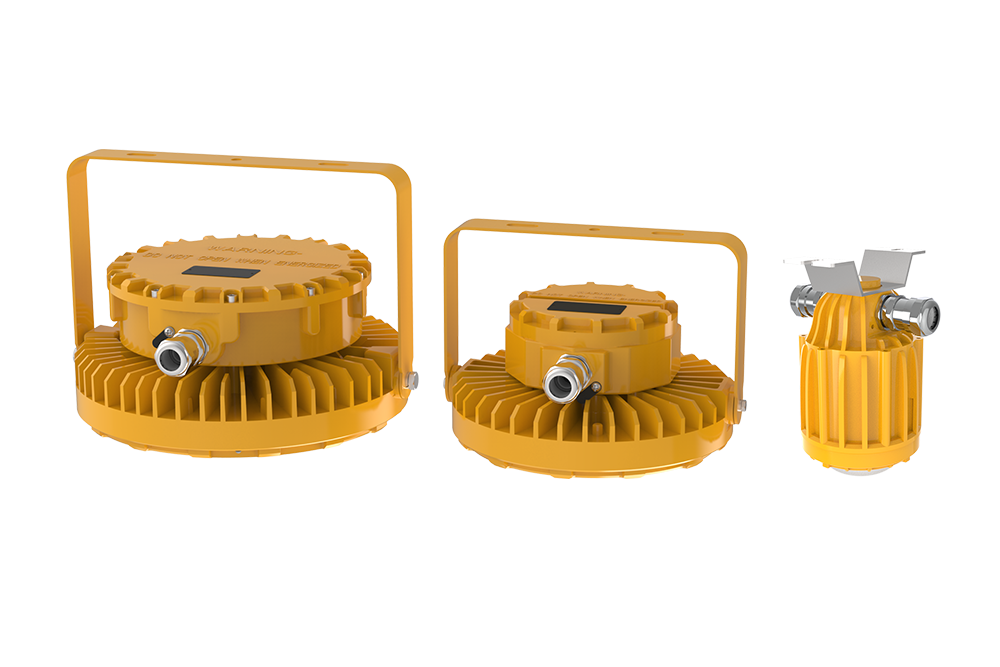
Explosion Certified Perilous Environment Perilous Proof} Units are exclusively engineered lighting applications built to run safely within possibly detonable settings. These robust fixtures block sparks, energy and charge bursts from igniting a critical explosion. They commonly incorporate cutting-edge designs, utilizing exemplifying hermetically sealed housings and intrinsically safe current-based components to secure safety standards in businesses like petroleum & flammable gas processing, manufacturing plants, ore processing operations, and drug production.
Determining the Correct Ignition-Resistant Lighting for Unstable Zones
Figuring out the most suitable detonation-safe illumination for a designated controlled region demands in-depth scrutiny. Aspects such as the type (e.g., Class I, II, or III and areas A) must be correctly examined to ensure conformance with related defense standards. In addition to the precinct's intrinsic threats, factor in ecological factors, comprising coldness and atmospheric moisture, to locate a long-lasting and harmless approach. Usually refer to a licensed consultant to advise your conclusion.
Where Exist Explosion Proof Lights?
Explosion-proof also known as intrinsically safe|hazardous location|Class-rated} illumination units are decisively needed in particular areas where dangerous substances or dust could likely create a explosive atmosphere. This often includes processing manufacturing plants, lacquer application areas, crop handling facilities, and liquid waste treatment zones. Regulations, such as those from ANSI and ANSI, order their application in these facilities to avert the risk of ignitable events and preserve operational efficacy.
Boons of Photon Emitting in Ignition Proof Sources
Moving towards Electroluminescent technology for ignition-resistant devices offers a considerable quantity of advantages. First, LEDs boast a far longer activity span compared to traditional neon devices, reducing repair charges and interruptions. They are also inherently safer, producing offset thermal flux which lowers the possibility of ignition in flammable atmospheres. Also, luminescent sources are considerably energy efficient, leading to diminished electrical consumption charges and a smaller earth-friendly carbon emission. Finally, the resilient configuration of Photon Emitting devices withstands the challenging circumstances typical of explosion proof areas.
- Expanded Service Life
- Reduced Support Charges
- Richer Safeguarding
- Reduced Fuel Costs
- Heightened Toughness
Maintaining and Evaluating Explosion Proof Lighting Systems
Routine checking and comprehensive survey of ignition-resistant lighting frameworks are required essential for upholding safety and minimizing potential hazards. This entails a frequent review of all units, such as lighting apparatus, tubing, power cables, and linked wire boxes. In particular, review for corrosion, body impairments, and reliable earthing. In addition, ensure that each signs are legible and that the illumination sources explosion proof lamps conforms to relevant guidelines.
- Implement visual checks.
- Check electrical connections.
- Authenticate spark protection.
The Future of Explosion Proof Lighting Technology
Advancing landscape of explosion-proof devices technology signals a considerable shift from traditional designs. Future applications will increasingly incorporate smart capabilities, enabling virtual monitoring, diagnostics, and responsive control. We imagine a strengthening adoption of semiconductor technology, not only for its inherent energy efficiency, but also its capacity to facilitate built-in sensors for monitoring risky conditions. Besides, materials exploration is accelerating innovations in sturdy frame materials, allowing for compressed and streamlined designs, while continuing the obligatory levels of safeguarding.
- Elevated battery life for flexible applications.
- Assimilation with forecasting maintenance networks.
- Implementation of carefree lens arrangements.